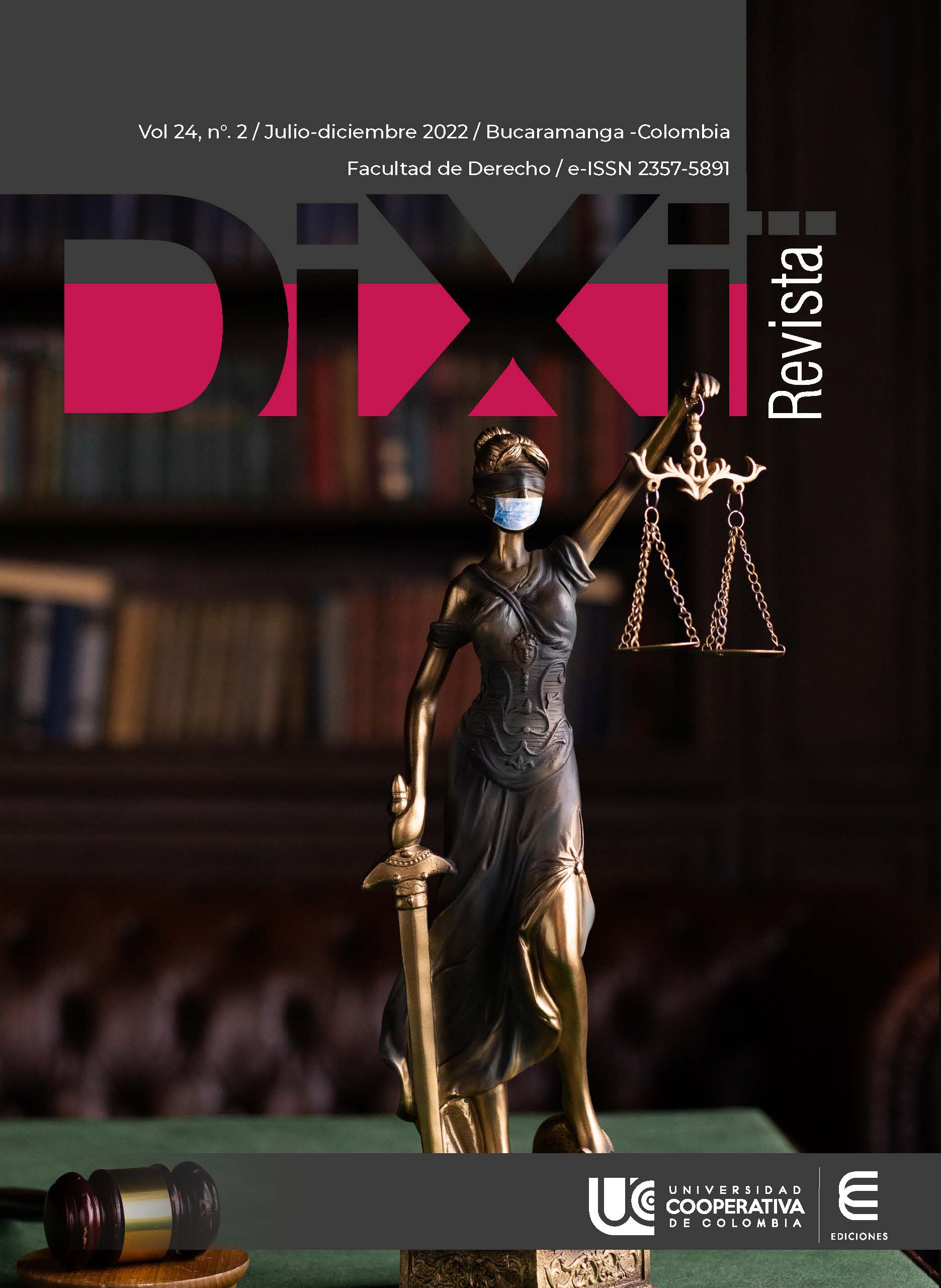
Technology, a key element for access to criminal and alternative justice in post-pandemic times
The pandemic generated by the sars-CoV2 virus showed us the weaknesses we have at all levels, from the personal level to the various responses of the countries. In most cases, it showed us the deficiencies in the health and social security system; in others, the delay in the use of electronic media in the administration of justice was very visible. The public perception is that the administration of justice in Mexico is very slow. Faced with a pandemic that forced us to close the courts, we found ourselves with an insufficient use of electronic media for this purpose and with intra and inter-departmental communication still on paper. This revealed to us the need to implement technology urgently, because if the administration of justice cannot stop, even less so in the criminal field and in the application of alternative mechanisms, which are the first option to try to resolve conflicts. In the state of Jalisco, there was a reaction and actions were taken to implement the use of technology in the criminal process and alternative mechanisms; however, even more must be done to be prepared for any future eventuality.
How to Cite
License
Copyright (c) 2022 DIXI

This work is licensed under a Creative Commons Attribution 4.0 International License.
Every single author of the articles has to declare that is an original unpublished work exclusively created by them, that it has not been submitted for simultaneous evaluation by another publication and that there is no impediment of any kind for concession of the rights provided for in the contract.
In this sense, the authors committed to await the result of the evaluation by the journal DIXI before considering its submission to another medium; in case the response by that publication is positive, additionally, the authors committed to respond for any action involving claims, plagiarism or any other kind of claim that could be made by third parties.
At the same time, the authors have to declare that they are completely in agreement with the conditions presented in their work and that they cede all patrimonial rights. These rights involve reproduction, public communication, distribution, dissemination, transformation, making it available and all forms of exploitation of the work using any medium or procedure, during the term of the legal protection of the work and in every country in the world, to the Universidad Cooperativa de Colombia Press.
Congreso Constituyente. CONSTITUCIÓN POLÍTICA DE LOS ESTADOS UNIDOS MEXICANOS. 5 de febrero de 1917.
Consejo Económico y Social de las Naciones Unidas. PRINCIPIOS BÁSICOS SOBRE LA UTILIZACIÓN DE PROGRAMAS DE JUSTICIA RESTAURATIVA EN MATERIA PENAL. ONU. (2002).
José Benito Pérez Sauceda. Métodos alternos de solución de conflictos: justicia alternativa y restaurativa para una cultura de 3D. Tesis doctoral, Universidad Autónoma de Nuevo León. 2019. Disponible en: https://cd.dgb.uanl.mx/handle/201504211/16414
Oficina del Alto Comisionado de las Naciones Unidas. Declaración sobre los principios fundamentales de justicia para las víctimas de delitos y del abuso de poder. 29 de noviembre de 1985. Disponible en: https://www.ohchr.org/es/instruments-mechanisms/instruments/declaration-basic-principles-justice-victims-crime-and-abuse
Organización de las Naciones Unidas contra la Droga y el Delito. SINERGIAS Y RESPUESTAS: ALIANZAS ESTRATÉGICAS EN MATERIA DE PREVENCIÓN DEL DELITO Y JUSTICIA PENAL. ONU. (2005).
Organización de Estados Americanos (OEA). Convención Americana sobre Derechos Humanos. Pacto de San José de Costa Rica. 22 de noviembre de 1969