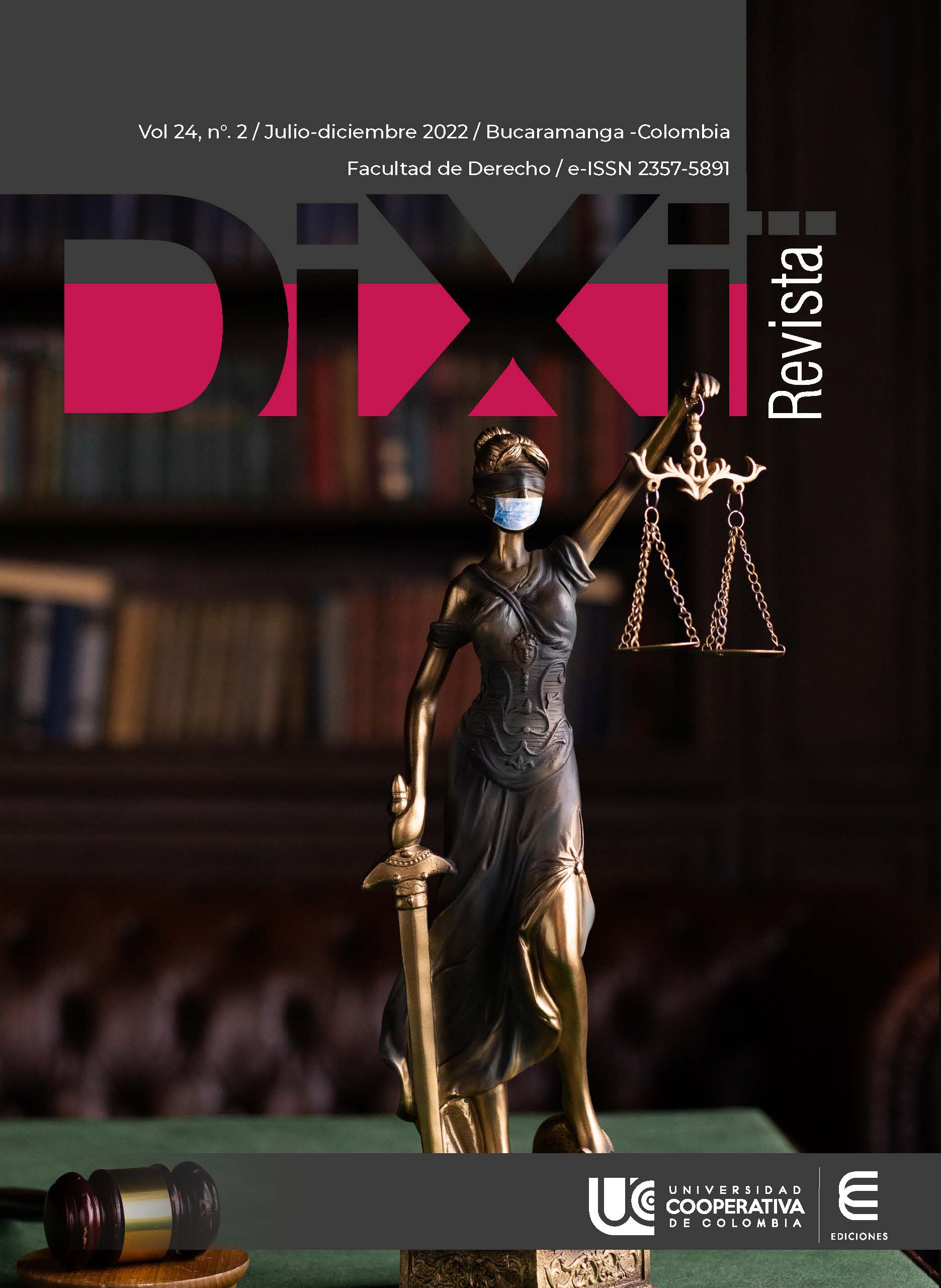
Transgression of the rights of women and the LGBT community due to gender inequality in public office
In addressing the problem of gender inequality in public office, it is possible to affirm that, despite the constant violation of rights that these two groups have suffered throughout history, today they enjoy greater participation at the highest decision-making levels of the branches of public power. However, the efforts of both women and the lgbt community to participate in democratic processes are undermined by the lack of implementation of public policies aimed at counteracting this problem.
In the context of the current situation generated by the covid-19 pandemic, women and people belonging to the lgbt community have had fewer opportunities to develop in the labor sphere, thus exacerbating the gap between men and women in different fields of society, a gap that is evident even in the spheres of public power.
Therefore, our research will answer the problem question: how does gender inequality in public office symbolize a transgression for the rights of women and the lgbt community in Colombia? Therefore, an analysis of gender inequality in public office as a determining factor for the transgression of women's rights and the lgbt community will be carried out. Three specific objectives are addressed: (i) to describe the evolution of the effective participation of women and the lgbt community in public office in Colombia; (ii) to identify the factors that transgress the equal participation in public office; and (iii) to compare the measures applied in Sweden and Colombia to counteract gender inequality in public office. The above is in order to contribute to political pluralism and the consolidation of a true democracy in Colombia.
How to Cite
License
Copyright (c) 2022 DIXI

This work is licensed under a Creative Commons Attribution 4.0 International License.
Every single author of the articles has to declare that is an original unpublished work exclusively created by them, that it has not been submitted for simultaneous evaluation by another publication and that there is no impediment of any kind for concession of the rights provided for in the contract.
In this sense, the authors committed to await the result of the evaluation by the journal DIXI before considering its submission to another medium; in case the response by that publication is positive, additionally, the authors committed to respond for any action involving claims, plagiarism or any other kind of claim that could be made by third parties.
At the same time, the authors have to declare that they are completely in agreement with the conditions presented in their work and that they cede all patrimonial rights. These rights involve reproduction, public communication, distribution, dissemination, transformation, making it available and all forms of exploitation of the work using any medium or procedure, during the term of the legal protection of the work and in every country in the world, to the Universidad Cooperativa de Colombia Press.
Acuerdo 308 de 2008. Por el cual se adopta el Plan de Desarrollo Económico, Social, Ambiental y de Obras Públicas para Bogotá D.C. 2008-2012. Junio 9 de 2008.
Consejería Presidencial para la Equidad de la Mujer. COLOMBIA SIN TECHOS DE CRISTAL. DOCUMENTO DE ANÁLISIS DE LOS PLANES DE DESARROLLO DEPARTAMENTALES 2020-2023. Vicepresidencia de la República de Colombia. (2020). Disponible en: https://cutt.ly/IKQxQao
Corporación Caribe Afirmativo. Informe cargos públicos LGBTI en Colombia. Primer año de gestión. BOLETÍN AFIRMATIVO EDICIÓN N.° 2. Julio de 2017. Disponible en: https://cutt.ly/IKQxNVa
Decreto 455 de 2020. Por el cual se adiciona el Capítulo 3 al Título 12 de la Parte 2 del Libro 2 del Decreto 1083 de 2015, Reglamentario Único del Sector de Función Pública, en lo relacionado con la paridad en los empleos de nivel directivo. Marzo 21 de 2021. Diario Oficial N.° 51.263.
Departamento Administrativo Nacional de Estadística (DANE). Informe del censo nacional de población y vivienda. 2018. Disponible en: https://cutt.ly/qKQcadj
Departamento Administrativo Nacional de Estadística (DANE). Informe mujeres y hombres: brechas de género en Colombia. 2020. Disponible en: https://cutt.ly/YKQcdYA
Departamento Nacional de Planeación (DNP). Plan Nacional de Desarrollo 2018-2022. Pacto por Colombia, Pacto por la Equidad. 2018. Disponible en: https://cutt.ly/GKQckTj
Ivana Ivorra Andújar. Análisis de la política exterior feminista de Suecia durante el periodo 2014-2018. Trabajo de maestría. Universidad Autónoma de Barcelona. 2020. Disponible en: https://cutt.ly/PKQcz3I
Ley 22 de 1967. Por la cual se aprueba el Convenio Internacional del Trabajo, relativo a la discriminación en materia de empleo y ocupación. Junio 4 de 1958.
Ley Estatutaria 581 de 2000. Por la cual se reglamenta la adecuada y efectiva participación de la mujer en los niveles decisorios de las diferentes ramas y órganos del poder público. Mayo 31 de 2000. Diario Oficial N.° 44.026.
Ley Estatutaria 1475 de 2011. Por la cual se adoptan reglas de organización y funcionamiento de los partidos y movimientos políticos, de los procesos electorales y se dictan otras disposiciones. Julio 14 de 2011. Diario Oficial N.° 48.130.
Margarita Batlle. Mujeres en el Congreso colombiano: un análisis a partir de la primera implementación de la Ley de Cuota de Género en las elecciones de 2014. REVISTA COLOMBIA INTERNACIONAL 89. 2017. Disponible en: https://cutt.ly/PKQcmfp
Observatorio Participación Política de las Personas LGBTI en Colombia. RUTAS PARA LA INCLUSIÓN DE PERSONAS LGBTI EN LOS PARTIDOS Y MOVIMIENTOS POLÍTICOS COLOMBIANOS. Corporación Caribe Afirmativo. (2016). Disponible en: https://cutt.ly/aKQcThT
Programa de las Naciones Unidas para el Desarrollo (PNUD). En Día Internacional de la Democracia, Índice de Paridad Política resalta desafíos para lograr la igualdad política entre hombres y mujeres en Colombia. 2019. Disponible en: https://cutt.ly/0KQcI9O
Registraduría Nacional del Estado Civil. El voto femenino en Colombia: primer logro en la búsqueda de la equidad de género. REVISTA NUESTRA HUELLA 129. Noviembre de 2017.
Teresa García-Berrío Hernández. Democracia paritaria, ¿mito o realidad? Francia vs. Suecia: dos perspectivas antagónicas. ANUARIO DE DERECHOS HUMANOS 9. 2008. Pág. 267-336. Disponible en: https://cutt.ly/4KQcSuq